News and Announcements
Climate Adaptation Fund Announce Latest round of Grantmaking
Read the 2016 Request for Proposals, review the Applicant Guidance Document and submit a completed WCS Pre-proposal Application using our online application form no later than 5:00 PM EDT on Friday, April 8, 2016.
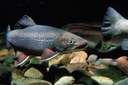
Service and partners announce science-based tool to help prioritize and target fish habitat conservation
The U.S. Fish and Wildlife Service and North Atlantic Landscape Conservation Cooperative (LCC) today announce the availability of an online tool that enables users to target and prioritize fish habitat conservation in the face of climate and land use change.
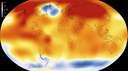
NASA, NOAA Analyses Reveal Record-Shattering Global Warm Temperatures in 2015
Earth’s 2015 surface temperatures were the warmest since modern record keeping began in 1880, according to independent analyses by NASA and the National Oceanic and Atmospheric Administration (NOAA).
BIG DATA as an engine for aquatic information creation
The smartest thing, the only thing really, we can do to conserve & preserve fisheries and aquatic biodiversity as the climate warms this century is to invest our limited resources wisely.
The eDNA revolution & developing comprehensive aquatic biodiversity archives
Measuring & understanding the effects of climate change on aquatic life requires an accurate baseline status assessment that can serve as a benchmark for comparisons through time.

Appalachian LCC part of Premiere Climate Education and Literacy Training Program
The inaugural Educator Climate and Conservation Colloquium (or EC3) brought together 50 teachers and school decision makers from across the nation to receive training on campus sustainability and wildlife conservation issues to better serve schools and communities.
Global Vulnerability of Forests to Climate Change-Related Tree Mortality is Widely Underestimated
Forests worldwide are vulnerable to growing risks of drought- and heat-induced tree mortality and forest die-off because of a rapidly warming Earth, according to just-published research in the scientific journal Ecosphere. The paper is an invited “ESA Centennial Paper” to commemorate the 100th anniversary of the Ecological Society of America.
Researchers Seek a Sneak Peek Into the Future of Forests
In May 2015, scores of scientists from dozens of research institutions descended on a patch of forest in central North Carolina, taking samples of everything from ants and mites to other microbes – samples they hope will offer a glimpse into the future of forest ecosystems.
Geodiversity Key to Conserving Biodiversity Under Climate Change
The physical factors that create diversity (landform, bedrock, soil and topography), collectively known as geodiversity, might be the key to conserving biodiversity under a changing climate.
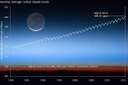
Monthly carbon dioxide levels hit new milestone
NOAA scientists reported that in March 2015 the monthly average global carbon dioxide level went above 400 parts per million for the first time.
A Complex Landscape has both Vulnerabilities and Resilience to Climate Change
Central Appalachian forests have been experiencing the effects of a changing climate for decades, and effects such as more heavy rainfall events, more drought, and more hot days are likely to continue, according to a new vulnerability assessment for the region by the U.S. Forest Service and many partners.
100 Case Studies Published Today Show How Communities Are Preparing Our Roads, Airports, and Transit Systems for Climate Change
One hundred case studies released today by the Georgetown Climate Center demonstrate how leaders are responding to the growing threats from climate change to America's roads, airports, transit systems, and infrastructure.
Secretary Jewell Announces New Wildlife and Climate Studies at the Northeast Climate Science Center
Secretary of the Interior Sally Jewell announced recently that Interior’s Northeast Climate Science Center (NE CSC) is awarding nearly $700,000 to universities and other partners for research to guide managers of parks, refuges and other cultural and natural resources in planning how to help species and ecosystems adapt to climate change.
Acquiring Information on the Climate Vulnerability of Appalachian Species and Habitats
A new report out of the Climate Change Vulnerability Assessment research project addresses how the Cooperative should acquire information about the climate vulnerability of Appalachian species and habitats and share with its partners.
New Recommendations Help Improve America’s Resilience to Climate Change
This week, the White House released the recommendations of the President’s State, Local and Tribal Leaders Task Force on Climate Preparedness and Resilience. It also announced new tools and actions to help planners build healthy and resilient communities, including a web-based Climate Resilience Toolkit that provides simple access to federal tools that can help planners incorporate a changing climate into their decisions.
Climate Change's Growing Threat to Public Lands
Secretary Jewell attended the 2014 World Parks Congress in Australia, where she stressed the need for international cooperation on public lands and the growing threat of climate change.
Listening for the Rain
Listening for the Rain starts a pluricultural conversation in which some Indigenous people who live in the central United States of America discuss their observations and understandings of, as well as responses to, climate change and variability.
Hot Topics Summer 2014
A quarterly newsletter developed by Southeast Regional Climate Change program.
President Recognizes Role of Private Forests in Climate Action Plan
We are writing to you, as members of the Forest‐Climate Working Group, to thank you for the central role that you have created for U.S. forests and forest products in your Climate Action Plan and the new natural resources policy proposals that you have announced this week.
Building community resilience by strengthening America’s natural resources and supporting green infrastructure
President Obama has made it clear that we have a moral obligation to our children and future generations to leave behind a planet that is not polluted and damaged. That is why, as part of his effort to combat climate change, the President launched a Climate Action Plan last year to cut carbon pollution, prepare communities for the impacts of climate change, and lead international efforts to address this global challenge.
Regional Science Efforts Highlighted in National Climate Adaptation Strategy Progress Report
Report includes several projects in the northeast and the Chesapeake Bay among 50 nationwide examples that illustrate a long-term vision for adaptive management in the face of climate change.
Video: Climate Change The Cost of Inaction
The Earth's climate is changing at an unprecedented rate. Climate change is already having impacts on people's lives across the country.
The Audubon Climate Change Report at a Glance
A new Climate Change report by Audubon is a comprehensive, first-of-its kind study that predicts how climate change could affect the ranges of 588 North American birds.
Land managers to gain tools to mitigate greenhouse gas emissions
Trees take in and store a lot of carbon dioxide, or CO2, a greenhouse gas. Being able to measure forestry and agricultural intake and emissions of CO2 is critical to developing a strategy for addressing climate change by reducing greenhouse gases.
Primary Influences on Water Temperature for Inland Streams
The COMET Program is pleased to announce the publication of the new lesson, "Primary Influences on Water Temperature for Inland Streams". The temperature of inland streams, rivers, and reservoirs affects aquatic wildlife, riparian vegetation, and infrastructure.
BioClimate
Periodic News from the National Climate Change and Wildlife Science Center (NCCWSC) and the DOI Climate Science Centers (CSCs)
2015 NOAA Funding Opportunity
NOAA's Climate Program Office (CPO) supports competitive research through four major Programs: Climate Observations and Monitoring (COM); Earth System Science (ESS); Modeling, Analysis, Predictions, and Projections (MAPP); and Climate and Societal Interactions (CSI).
Obama Administration dedicates nearly $10 million to help tribes prepare for climate change
As part of President Obama’s Climate Action Plan and continued commitment to support Native American leaders in building strong, resilient communities, Secretary of the Interior Sally Jewell and Assistant Secretary of Indian Affairs Kevin Washburn today announced the Administration has dedicated nearly $10 million this year to help tribes prepare for climate change through adaptation and mitigation.
New Guide Helps Conservationists Address Uncertain Future
A new publication by the U.S. Fish and Wildlife Service and the Wildlife Conservation Society (WCS) aims to help natural resource managers plan for a variety of long-term threats to America’s wildlife and habitats.
Scientists Locate Natural “Strongholds” across Southeast US that Could Protect Nature in the Face of Climate Change
A new study by The Nature Conservancy has identified a series of natural “strongholds” across the Southeastern United States that are predicted to withstand the growing impacts of climate change and help ensure nature’s survival.

Climate.gov wins two Webby Awards and a People’s Voice Award!
NOAA Climate.gov was selected by the International Academy of the Digital Arts & Sciences to receive two Webby Awards in the "Government" and "Green" categories. They also garnered a People's Voice Award in the "Green" category (placing second overall in the "Government" category).

LCC Coordinator Gives Keynote Address at Earth Day Celebration
Appalachian LCC Coordinator Dr. Jean Brennan was a featured speaker for the Distinguished Lecture Series at Northwest Missouri State University during its annual Earth Week Celebration.
Our Changing Climate – Third National Assessment Released
The Third National Assessment Release (NCA) report was released today. The report was written by 240 authors who worked in author teams reflecting their expertise, who also selected additional contributing authors, including several scientists and experts from USDA.
Progress toward reducing oil and gas air emissions in Ohio
New rules will help reduce air pollution that harms public health and contributes to climate change.
IPCC Working Group II Report Released
The Intergovernmental Panel on Climate Change (IPCC) issued a report today that says the effects of climate change are already occurring on all continents and across the oceans. The world, in many cases, is ill-prepared for risks from a changing climate. The report also concludes that there are opportunities to respond to such risks, though the risks will be difficult to manage with high levels of warming.

Mapping Climate Change in the Oceans
NOAA Research and NOAA Fisheries collaborate on new method to assess fish vulnerability to climate change
Interior Releases First National Interactive Map of Onshore Wind Turbines
USGS Scientific Tool to Aid Landscape-Level Planning, Responsible Renewable Energy Development, Support Climate Action Plan
AAAS Kicks Off Initiative to Recognize Climate Change Risks
AAAS is announcing the launch of a new initiative to expand the dialogue on the risks of climate change.
'Climate Hubs' Will Provide Regional Networks on Climate Science, Forecasting Impacts as Part of President's Climate Action Plan
Agriculture Secretary Tom Vilsack announced today the creation of the first ever Regional Hubs for Risk Adaptation and Mitigation to Climate Change at seven locations around the country. "Climate Hubs" will address increasing risks such as fires, invasive pests, devastating floods, and crippling droughts on a regional basis, aiming to translate science and research into information to farmers, ranchers, and forest landowners on ways to adapt and adjust their resource management.
NRCS and Forest Service Partner to Improve Forest Health
Agriculture Under Secretary for Natural Resources and Environment Robert Bonnie announced today a multi-year partnership between the U.S. Forest Service and the Natural Resources Conservation Service (NRCS) to improve the health and resiliency of forest ecosystems where public and private lands meet across the nation.

Appalachian LCC Winter Newsletter
The 2014 Winter Newsletter highlights how the Appalachian LCC and its partners are addressing landscape issues and bringing together a community to find sustainable solutions.
Interior Announces FY 2013 Climate Science Center Research Projects
In 2013 the Climate Science Centers are awarding nearly $7 million to universities and other partners for research as part of President Obama’s Climate Action Plan to reduce carbon pollution, move our economy toward clean energy sources and begin to prepare our communities for the impacts of climate change.
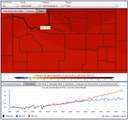
What are Future Climate Projections for Precipitation and Temperature for Your County?
For the first time, maps and summaries of historical and projected temperature and precipitation changes for the 21st century for the continental U.S. are accessible at a county-by-county level on a website developed by the U.S. Geological Survey in collaboration with the College of Earth, Oceanic and Atmospheric Sciences at Oregon State University.

The Nature Conservancy Releases Country-Level Temperature and Precipitation Data for Climate Resilience and Adaptation Planning
The Nature Conservancy has released a new country-level dataset for its online Climate Wizard mapping tool that enables users to visualize future climate conditions using the most recent modeled data from the Intergovernmental Panel on Climate Change (IPCC).

Executive Order -- Preparing the United States for the Impacts of Climate Change
President Obama signed an executive order that will begin to prepare the Nation for the impacts of climate change by undertaking actions to enhance climate preparedness and resilience.

Interior Secretary Offers Vision for Conservation
Secretarial Order underscores LCC role and commitment to landscape-scale planning and design to conserve the Nation's land, water, wildlife and cultural resources in the face of climate change.

EPA Releases Agency Plans for Adapting to a Changing Climate
The U.S. Environmental Protection Agency (EPA) today released its draft Climate Change Adaptation Implementation Plans for public review and comment. In support of President Obama’s Climate Action Plan and Executive Order on Preparing the United States for the Impacts of Climate Change announced today, the Implementation Plans provide detailed information about the actions EPA plans to take across the country to help communities adapt to a changing climate.
Observed Changes in Phenology Across the United States - Northeast
Phenology — the seasonal timing of life cycle events in plants and animals such as flowering, hibernation, and migration — has been linked to shifts in the timing of allergy seasons, public visitation to National Parks, and cultural festivals. Change in phenology, recognized as a bio-indicator of climate change impacts, has also been linked to increased wildfire activity and pest outbreak, shifts in species distributions, spread of invasive species, and changes in carbon cycling in forests. Phenological information can and already is being used to identify species vulnerable to climate change, to generate computer models of carbon sequestration, to manage invasive species, to forecast seasonal allergens, and to track disease vectors, such as mosquitoes and ticks, in human population centers.
Downscaling Scenarios of Climate Change Project to Map Entire Appalachian LCC Region
A DOI Southeast Climate Science Center funded project will be evaluating the latest generation of global climate models to generate scenarios of future change to climate, hydrology, and vegetation for the Southeastern U.S. as well as the entire range of the Appalachian LCC.
Virginia’s Climate Modeling and Species Vulnerability Assessment
The National Wildlife Federation (NWF) is excited to announce the publication of Virginia’s Climate Modeling and Species Vulnerability Assessment: How Climate Data Can Inform Management and Conservation. This report is the culmination of over 4 years of effort by NWF, Virginia Department of Game and Inland Fisheries (DGIF), Conservation Management Institute, and Kutztown University to downscale climate data for Virginia and use that in a species modeling effort to project how a selections of species (wildlife, fish, and plants) may change their distribution across the landscape based on climate change.
Beyond Season's End
A website created for wildlife and fisheries professionals confronting the threat of global climate change.
Native Plants Boost Conservation Benefits, Strengthen Wildlife Populations
Native plants in many parts of the U.S. are struggling because of changes in land use and climate, posing problems for the wildlife species that depend on them for sustenance and sanctuary.
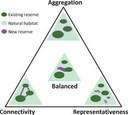
Designing reserves for biodiversity
What is the best way to design a new conservation reserve? There are multiple factors to consider, including species diversity, spatial extent, and future climate changes.
Protecting Southern Appalachian Wildlife in an Era of Climate Change
The Open Space Institute is pleased to announce the second round of funding through the Southern Cumberland Land Protection Fund, which will award grants and loans to conservation projects protecting habitat that facilitates wildlife adaptation to changes in climate and other environmental factors.
Newest Version of Climate Funding Opportunities
This document provides a snapshot of currently available, climate-related funding opportunities compiled by NOAA and partners in the Great Lakes Region.
New Online Tool Helps Producers Estimate Carbon Stowed in Soil
A new online tool , called COMET-FARM™, enables agricultural producers to calculate how much carbon their conservation actions can remove from the atmosphere.
Climate Science Center Research Funding Opportunity for FY 14
The U.S. Department of the Interior Northeast, South Central, and Southwest Climate Science Centers (CSCs) are seeking proposals for FY 2014. Proposals are invited for projects that support CSC science priorities.
Spring 2012 Earliest on Record
March 2012 set records for warm temperatures that promoted early leafing and flowering across large areas of the United States.
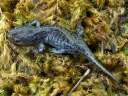
Front Row Seats to Climate Change
Increasingly erratic rainfall patterns can lead to declines in southeastern frog and salamander populations, but protecting ponds can improve their plight.
Interior Appoints New Climate Change Advisory Committee
Secretary of the Interior Sally Jewell today announced the members of a newly created federal advisory committee who will provide guidance about the Interior Department’s climate change adaptation science initiatives.
NRCS helps build resiliency to climate change
As experts predict growing climate changes in the United States, the USDA’s Natural Resources Conservation Service offers a variety of practices, programs and studies that help landowners build resiliency to its effects.
National Strategy Will Help Safeguard Fish, Wildlife and Plants in a Changing Climate
In partnership with State and Tribal agencies, the Obama Administration today released the first nationwide strategy to help public and private decision makers address the impacts that climate change is having on natural resources and the people and economies that depend on them. Developed in response to a request by Congress, the National Fish, Wildlife, and Plants Climate Adaptation Strategy is the product of extensive national dialogue that spanned nearly two years and was shaped by comments from more than 55,000 Americans.
USDA Reports Synthesize Literature on Climate Change Effects and Adaptation Strategies for U.S. Agriculture and Forests
The U.S. Department of Agriculture (USDA) released two comprehensive reports today that synthesize the scientific literature on climate change effects and adaptation strategies for U.S. agriculture and forests.

Southeastarn CSC Revamps Website
The Department of the Interior Southeastern Climate Science Center has recently revamped its website to include sections on funded projects, partner LCCs, partner resources, and much more.
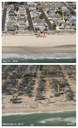
USGS-NOAA: Climate Change Impacts to U.S. Coasts Threaten Public Health, Safety and Economy
According to a new technical report, the effects of climate change will continue to threaten the health and vitality of U.S. coastal communities' social, economic and natural systems.
USGS Climate Science Centers Annual Funding Opportunity
Funding Opportunity Announcement for the eight Department of Interior Climate Science Centers (CSC) for Fiscal Years 2013 and 2014.
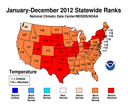
2012 was Warmest and Second Most Extreme Year on Record for the Contiguous U.S.
2012 marked the warmest year on record for the contiguous United States with the year consisting of a record warm spring, second warmest summer, fourth warmest winter and a warmer-than-average autumn.
Emerging Consensus Shows Climate Change Already Having Major Effects on Ecosystems and Species
Plant and animal species are shifting their geographic ranges and the timing of their life events – such as flowering, laying eggs or migrating – at faster rates than researchers documented just a few years ago, according to a technical report on biodiversity and ecosystems used as scientific input for the 2013 Third National Climate Assessment.
Highly anticipated down-scaled climate data to be released this winter
Global climate models project that Earth’s temperature will warm by about 2°-4°C (about 3°-7°F) in the coming century. But what does that mean for communities, natural resource managers, and other local interests?

New Website launches - ConservationCorridor.org
Landscape corridors are among the most important conservation strategies in the face of global changes such as habitat fragmentation, habitat destruction, and climate change.
Sizing up Biomass from Space
The biomass stored in forests is thought to play a critical role in mitigating the catastrophic effects of global climate change.
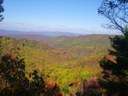
Lock Haven, Nature Conservancy Protect 5,200 Acres in Conservation Effort
Lock Haven City Authority, as a partner in The Nature Conservancy’s Working Woodlands Program, agrees to forever protect and sustainably manage its forest and freshwater resources.
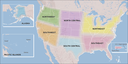
Interior Secretary Announces Funding for 2012 CSC Research
Secretary of the Interior Ken Salazar has announced funding of more than $10 million awarded by Interior's regional Climate Science Centers to universities or other partners for research to guide managers of parks, refuges and other resources in planning how to help species and ecosystems adapt to climate change.
DOI Invited Nominations for NCCWSC & CSC Federal Advisory Committee
Intent to create a Federal Advisory Committee for the USGS National Climate Change and Wildlife Science Center and DOI Climate Science Centers
USFWS Climate Change Update - October
Climate Change Update provides information and news related to the Service's strategic response to accelerating climate change.

Scientists Locate Natural “Strongholds” that Could Protect Nature in the Face of Climate Change
A new study by The Nature Conservancy has identified a series of landscapes across the American Northeast and southeastern Canada that are predicted to withstand the growing impacts of climate change and help ensure nature’s survival.
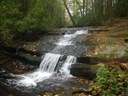
Appalachian LCC Funds Four Landscape-level Projects
The Appalachian Landscape Conservation Cooperative (LCC) is investing in conservation projects across the Appalachian region that will support the sustainable management of resources and develop tools and information for conservation delivery.

Kimberly Terrell, Researcher of the Smithsonian Conservation Biology Institute
Kimberly Terrell describes her work studying the biological constraints of salamanders to adjust to climate change and how the regional nature of the LCC can ensure efficiencies for conservation efforts as well as bring managers and researchers together to work towards common conservation goals.

Thomas Minney, Central Appalachians Project Coordinator for The Nature Conservancy
Thomas Minney discusses the potential of the Appalachian LCC, how this organization can address large-scale issues like climate change, and the need to achieve common conservation goals.